How Much Is a Scrap Car Worth in NZ? Here’s What Actually Decides the Price
Ring three wreckers about the same dead Corolla and you might get three very different numbers. One offers $200, one offers $500, one says $800 “depending on condition.” No wonder half the people who call us open with the same slightly suspicious question: “How do you actually work out what my car’s worth?”
Fair question. So rather than giving you the usual “every car is different!” brush-off, here’s an honest look at what goes on behind the quote — the five things that genuinely move the number, and a couple of things that don’t matter nearly as much as people think.
1. Weight. Boring, but it’s the floor price
At the absolute minimum, a scrap car is worth its weight in steel. Scrap steel is traded globally, so the base rate moves with international commodity prices — which is why the same car might fetch a bit more one month than the next, and why nobody serious publishes a fixed price list that never changes.
This is also why a big old Falcon ute will always out-earn a Suzuki Swift on the scales, even if both are equally stuffed. More metal, more money. Simple as that.
2. Parts demand. This is where the real money hides
Weight sets the floor, but parts set the ceiling. A car only has scrap-steel value if nothing on it is worth reselling — and for popular models, plenty is.
If you’re sitting on a dead Toyota Hilux, Corolla, Nissan Navara or just about any common Japanese import, there’s a queue of people who need its doors, lights, seats and engine parts. Wreckers pay more for those cars because they’ll earn it back on the parts shelf. We wrote about this whole process in our post on what happens to your car after removal — the short version is that the more of your car we can give a second life, the more we can pay you for it.
Rare European models are the odd ones out. Lovely cars, but when parts demand is thin, the offer leans back toward weight.
3. What’s still attached
Two identical cars can be worth quite different money depending on what’s actually on them when the truck arrives:
- Catalytic converter — contains small amounts of platinum, palladium and rhodium. If it’s been cut off (sadly common), the value goes with it.
- Battery — worth money in its own right as recyclable lead.
- Wheels and tyres — alloys with legal tread are worth more than rusty steelies on slicks.
- Complete engine and gearbox — even seized, they’re worth more present than absent.
Moral of the story: don’t let someone “do you a favour” by stripping bits off before you sell. A complete car is worth more than the sum of a half-stripped one.
4. Where the car is
Pickup distance is part of the cost of buying your car. We’ve got yards and trucks from Whangarei down to Christchurch, so for most Kiwis we can collect for free and still pay properly. But a car down a steep metal driveway at the end of a rural road takes more time and gear to collect than one parked on a flat street in Henderson — and with some operators, that difference quietly comes out of your offer. Always ask whether the quote includes pickup. Ours does.
5. Condition — but not the way you’d think
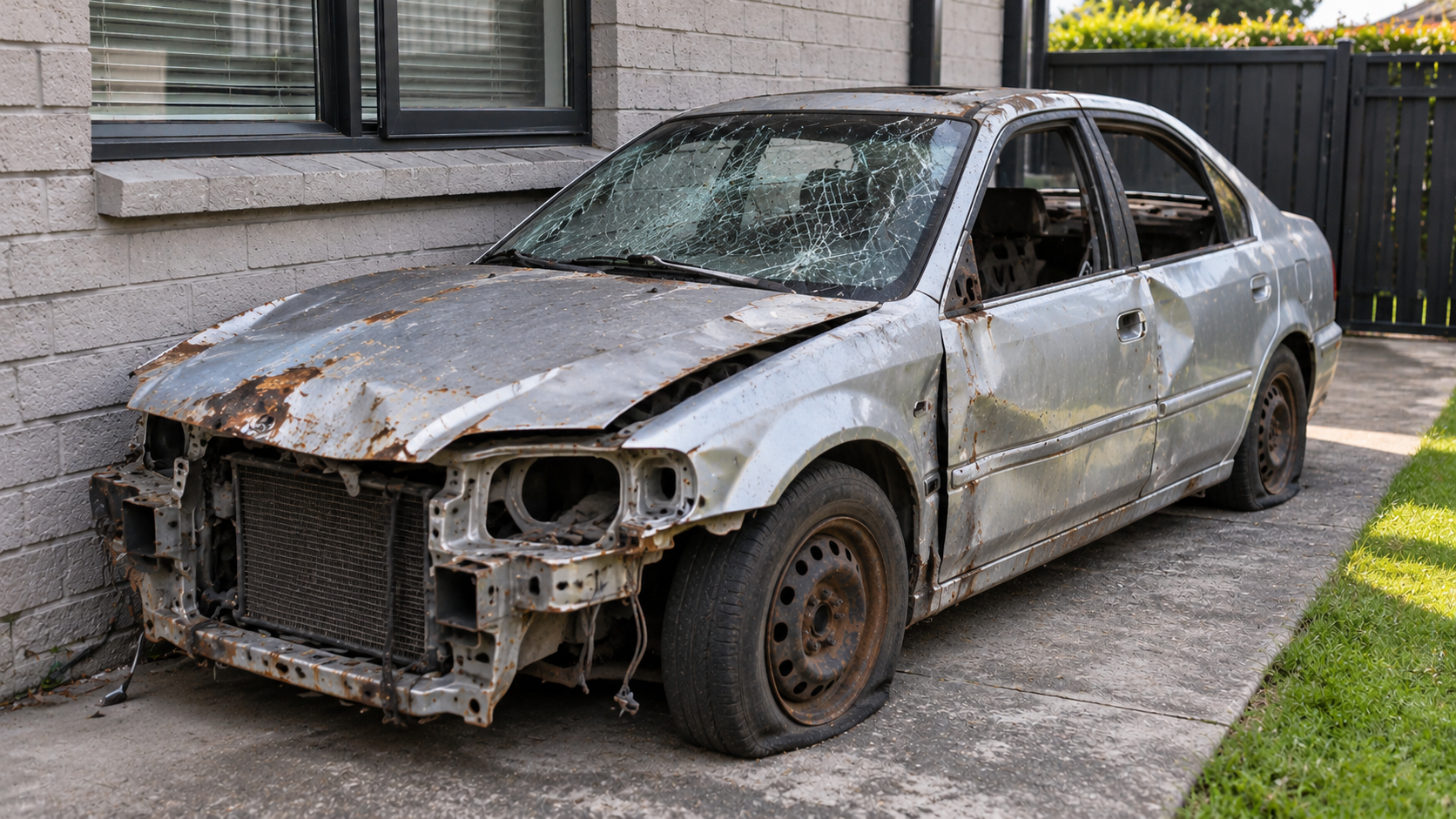
Here’s the counterintuitive bit: whether the car runs matters less than people expect. A non-runner with a straight body and good panels can beat a running car that’s been rolled. We’re usually buying the car for parts and materials, not to drive it home.
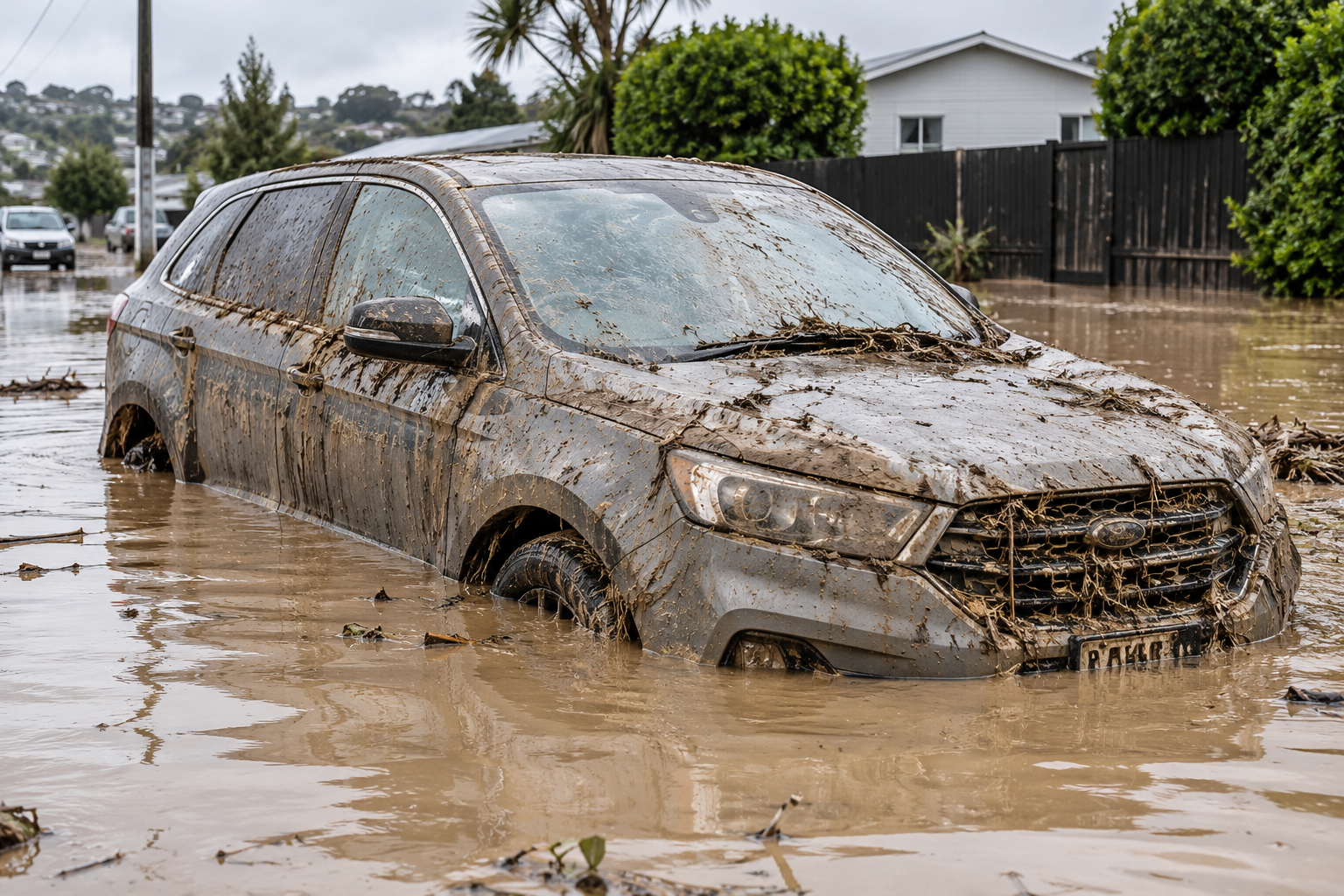
What does hurt the price is fire damage, serious rust through the structure, and flood damage — though even write-offs and flood cars are worth something, which we covered in our guide to selling a flood-damaged or written-off car.
And the stuff people stress about? Expired rego, failed WOF, lost service history, dog hair in the boot — none of it moves the needle. If your car has no WOF or rego, it’s still worth the same to us; you just can’t legally drive it here, which is what the free towing is for.
So what’s the actual number?
In New Zealand, genuine scrap-only cars typically land in the low hundreds, common models with decent parts value do noticeably better, and larger vehicles — utes, vans, trucks, 4WDs — better again. We’ve paid four figures plenty of times for vehicles the owner assumed were worthless.
The only way to know your number is to ask. Call us on 0800 8200 600 or fill in the quote form with your car’s make, model, year and a quick honest description. Takes two minutes, the quote is free, and if you’re happy we can usually collect the same day — cash in hand before the truck leaves.
One last tip: a scrap car is worth the most today. Every month it sits in the driveway, it rusts a little more, the battery dies a little harder, and the offer gets a little smaller. The best time to sell it was probably last summer. The second best time is now.
Car Body Removals buys cars, utes, vans and trucks in any condition across New Zealand, with free same-day pickup from Whangarei, Auckland, Tauranga, Taranaki, Wellington and Christchurch.